


Indication
With Indian IPTV USA, your family has access to a wide range of Indian entertainment, news, and children’s programming, offering plenty of natural opportunities for meaningful media literacy conversations. Pair your subscription with a reliable Indian IPTV Box for easy, everyday access.
Commentaires
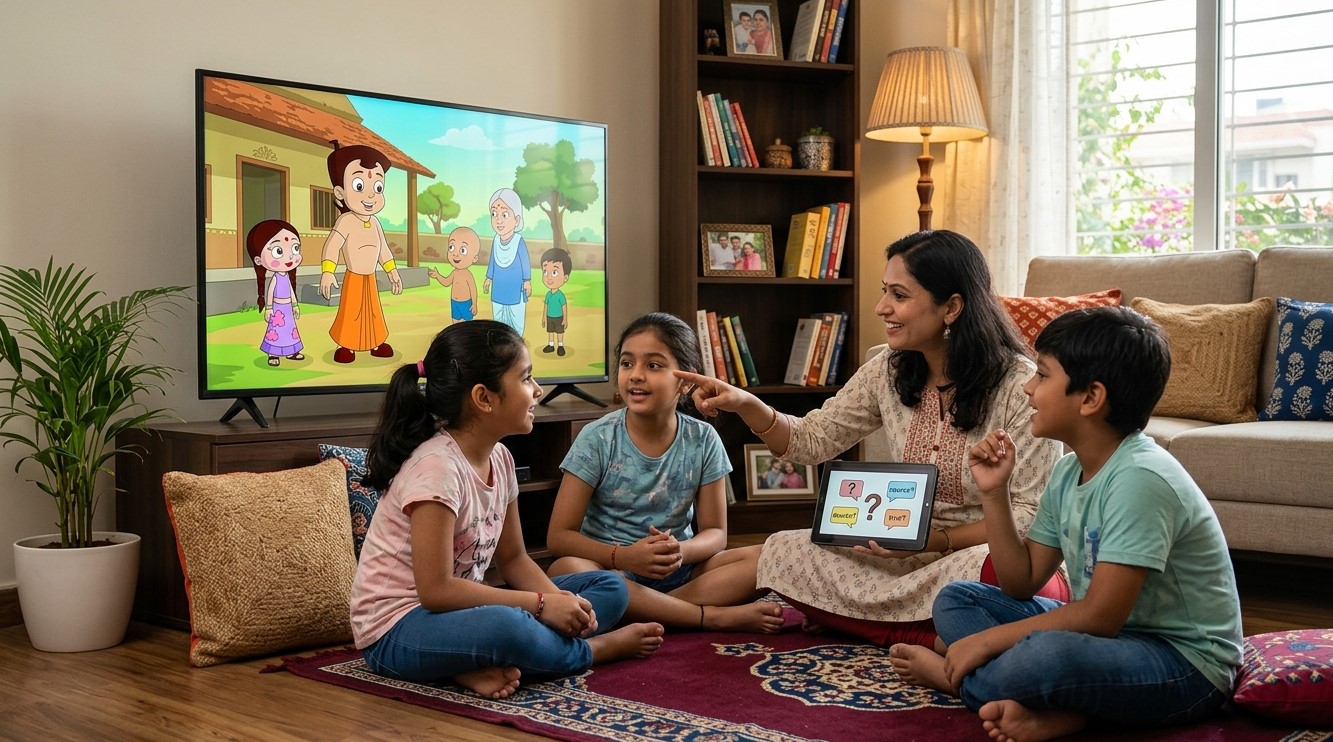
Television is often treated as pure entertainment, but it’s also a genuinely useful tool for teaching kids how to think critically about what they watch, from spotting advertising tactics to understanding how stories are constructed. For families raising children on a mix of Indian and American media, this is an especially valuable skill to build early. Here’s how to use your Indian IPTV USA subscription as a starting point for real media literacy conversations at home.
Table of Contents
- What Media Literacy Actually Means for Kids
- Why Indian TV Offers Unique Teaching Opportunities
- Talking About Advertising and Sponsorships
- Understanding Fiction vs. Reality in Serials and Reality Shows
- Discussing Stereotypes and Representation
- Comparing News Coverage Across Channels
- Encouraging Questions During and After Viewing
- Age-Appropriate Media Literacy Milestones
- Simple Conversation Starters by Content Type
- Frequently Asked Questions
What Media Literacy Actually Means for Kids
Media literacy is the ability to critically analyze and understand media messages, recognizing the difference between fact and opinion, understanding persuasive techniques, and thinking about who created a piece of content and why. For kids, this doesn’t need to be a formal lesson, it can develop naturally through everyday conversations about the shows and channels they’re already watching.
Why Indian TV Offers Unique Teaching Opportunities
Watching Indian television alongside American media gives kids a genuinely useful comparative lens, noticing differences in storytelling style, advertising approaches, and cultural framing between the two. This comparison itself is a valuable media literacy exercise, helping children understand that media is shaped by its cultural and commercial context rather than being a neutral window onto reality.
Talking About Advertising and Sponsorships
Indian television, like television everywhere, includes a significant amount of advertising, and this offers a natural opportunity to talk with kids about persuasive techniques. Simple questions like « why do you think they used a cricket star to sell that product? » or « what is this ad trying to make us feel? » help children start recognizing marketing strategies rather than absorbing them uncritically.
Understanding Fiction vs. Reality in Serials and Reality Shows
Popular Indian serials often feature dramatic, larger-than-life storylines, while reality shows are edited and structured for entertainment value rather than presenting an unfiltered reality. Helping kids understand that even « reality » TV is carefully edited and produced builds a healthy skepticism that extends well beyond just Indian programming, into how they engage with all media throughout their lives.
Discussing Stereotypes and Representation
Like television everywhere, Indian shows sometimes rely on simplified character types or cultural stereotypes for storytelling convenience. Gently pointing out and discussing these patterns with older kids, without being heavy-handed, helps them develop the ability to notice when media relies on shortcuts rather than nuanced representation, a skill that transfers directly to how they’ll evaluate other media they encounter.
Comparing News Coverage Across Channels
For older kids and teens, comparing how the same news story is covered across different channels, whether different Indian news networks or comparing Indian and American coverage of a shared international story, is one of the most effective media literacy exercises available. This helps them understand that news involves editorial choices about framing and emphasis, rather than being a single, objective account.
Encouraging Questions During and After Viewing
Rather than treating TV time as purely passive, occasionally pausing to ask open-ended questions turns viewing into an active learning moment:
- « Why do you think the character made that choice? »
- « Do you think this show is trying to teach a lesson, or just entertain us? »
- « How would this story be different if it were made in America instead of India? »
- « What do you think is real and what do you think is exaggerated for the show? »
Age-Appropriate Media Literacy Milestones
| Age Range | Focus Area |
|---|---|
| Preschool (3-5) | Distinguishing cartoons from real life, noticing basic emotions in characters |
| Early elementary (6-8) | Understanding that ads try to sell things, noticing repeated story patterns |
| Late elementary (9-11) | Discussing character motivations, recognizing exaggeration in reality shows |
| Teens (12+) | Comparing news framing across sources, discussing representation and stereotypes |
Simple Conversation Starters by Content Type
| Content Type | Sample Question |
|---|---|
| Cartoons | « What lesson do you think this episode was trying to teach? » |
| Serials/Dramas | « Do you think this could really happen, or is it exaggerated for the show? » |
| Reality shows | « How do you think the editors decided what to show us? » |
| News | « How might someone with a different opinion see this story differently? » |
| Advertisements | « What is this ad trying to make you feel or want? » |
Frequently Asked Questions
What age should I start talking to my kids about media literacy? Even preschool-aged children can begin learning simple distinctions, like recognizing that cartoons aren’t real, with more advanced media literacy conversations developing naturally as they get older.
Do I need special educational content, or can regular Indian TV shows work for this? Regular entertainment content works well for building media literacy skills, since the goal is developing critical thinking habits during everyday viewing rather than requiring specialized educational programming.
How do I bring up stereotypes in shows without being preachy? Gentle, curious questions work better than lectures, simply asking what your child noticed or thought about a character can open a natural conversation without feeling forced.
Can comparing news channels really help teach media literacy? Yes, especially for older kids and teens, comparing how different channels frame the same story is one of the most effective ways to illustrate that media involves editorial choices.
Is it okay if my kids just want to watch for fun sometimes without a lesson attached? Absolutely, not every viewing session needs to become a teaching moment. Occasional, natural conversations are more effective than turning every show into a structured lesson.
Turn Screen Time Into Meaningful Time
With Indian IPTV USA, your family has access to a wide range of Indian entertainment, news, and children’s programming, offering plenty of natural opportunities for meaningful media literacy conversations. Pair your subscription with a reliable Indian IPTV Box for easy, everyday access.
Conclusion
With Indian IPTV USA, your family has access to a wide range of Indian entertainment, news, and children’s programming, offering plenty of natural opportunities for meaningful media literacy conversations. Pair your subscription with a reliable Indian IPTV Box for easy, everyday access.
Mots Clés : 131I