


Indication
A practical guide to gentle movement, posture, daily habits, and when to seek professional care
Commentaires
Lower back pain is one of the most common problems affecting adults. It can develop after long hours of sitting, lifting, poor posture, reduced activity, repetitive movement, or an awkward position during sleep. In many cases, mild back discomfort improves with sensible self-care and a gradual return to normal activity. However, persistent or severe pain should not be ignored.
This guide explains practical ways to support a healthier back at home. The focus is on gentle movement, everyday habits, and knowing when professional assessment may be appropriate. These suggestions are general information and are not a substitute for an individual medical or physiotherapy assessment.
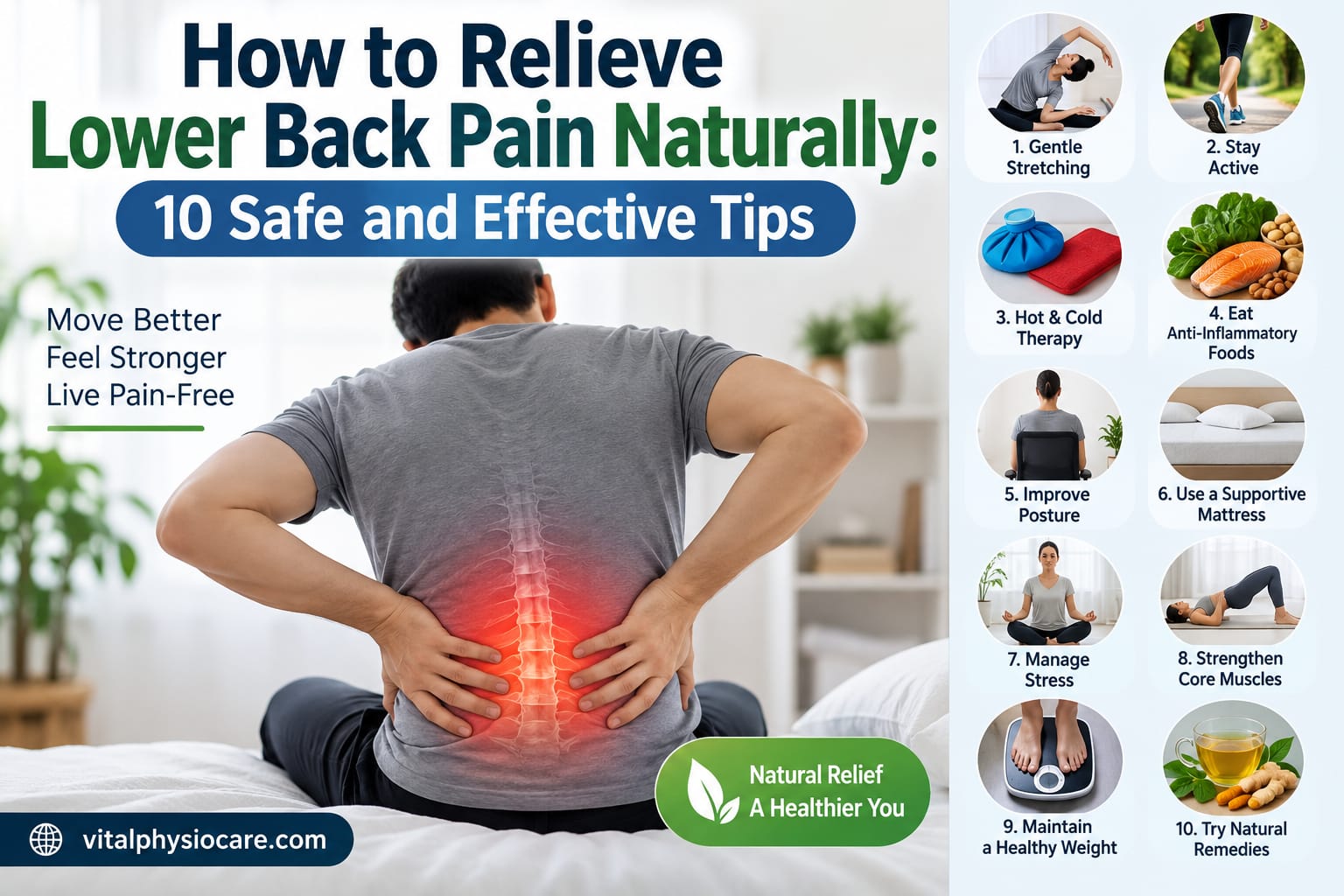
10 Safe and Effective Tips for Lower Back Pain Relief
1. Keep Moving Gently
Complete bed rest is usually not the best approach for ordinary back discomfort. If movement is comfortable, short walks and gentle daily activities can help prevent stiffness. Start with a small amount and gradually increase your activity as tolerated.
Avoid suddenly returning to heavy lifting, intense workouts, or movements that clearly increase your symptoms. The goal is controlled, comfortable movement rather than pushing through severe pain.
2. Improve Your Sitting Posture
Long periods at a desk can place extra stress on the lower back, particularly when you repeatedly slouch or stay in one position. Keep your feet supported, bring your screen to a comfortable height, and try to keep your back supported.
More importantly, avoid staying still for hours. Stand up, walk briefly, or change position regularly. A good workstation supports movement rather than forcing you into one rigid posture all day.
3. Try Gentle Stretching
Gentle stretching may help reduce stiffness and improve comfort for some people. Examples can include a comfortable knee-to-chest movement, gentle pelvic tilts, or a relaxed hamstring stretch.
Move slowly and breathe normally. A stretch should feel mild rather than sharp. Stop an exercise if it causes significant pain, numbness, weakness, or symptoms that spread down the leg.
4. Strengthen Your Core and Hips Gradually
The muscles around your abdomen, hips, pelvis, and back help support everyday movement. Once acute discomfort settles, a gradual strengthening program may help you return to normal activities and improve physical capacity.
Exercises should be selected according to your symptoms and ability. A physiotherapist can assess your movement and design a progressive program rather than giving you a one-size-fits-all routine.
5. Use Heat or Cold for Comfort
Some people find a warm shower, heating pad, or warm pack soothing when the back feels stiff. Others prefer a cold pack, especially after a recent flare-up. Use whichever feels more comfortable and protect your skin from direct or prolonged exposure.
Heat and cold are mainly comfort measures; they do not address every possible cause of back pain. If your pain keeps returning, focus on assessment, movement, and the factors contributing to it.
6. Lift Objects Safely
When lifting, plan the movement first. Keep the object close to your body, avoid twisting while carrying it, and use your legs and hips to help with the movement. For heavy or awkward objects, ask for assistance.
If lifting repeatedly triggers your pain, consider changing the task, reducing the load, or getting professional advice about movement and strength.
7. Pay Attention to Sleep Habits
Poor sleep can make pain feel harder to manage. Aim for a comfortable sleeping position and a mattress and pillow arrangement that allows you to rest without repeatedly waking because of discomfort.
There is no single sleeping position that is perfect for everyone. Side sleeping with appropriate support between the knees may feel comfortable for some people, while others prefer sleeping on their back with support under the knees.
8. Build Activity Back Slowly
If you have reduced exercise because of back pain, avoid trying to make up for lost time in one session. Increase walking, strengthening, or other physical activity gradually.
A useful principle is to look at how your body responds during the activity and afterward. If a particular increase consistently causes a major flare-up, reduce the intensity or volume and progress more slowly.
9. Maintain a Healthy Daily Routine
Regular physical activity, adequate sleep, balanced nutrition, and avoiding prolonged inactivity can support overall musculoskeletal health. If your work involves long periods of sitting or standing, vary your position throughout the day.
Small changes are often easier to maintain than dramatic changes. A short daily walk and regular movement breaks can be more realistic than an intense routine that you cannot sustain.
10. Consider Professional Physiotherapy
If back pain is persistent, repeatedly returning, limiting work or exercise, or making ordinary activities difficult, a physiotherapy assessment may be useful. A professional can review your symptoms, movement, strength, and functional limitations and develop an individualized plan.
Vital Physio Care provides physiotherapy-related information and services that may help people understand their options for managing musculoskeletal problems. Visit Vital Physio Care for more information and to explore the available physiotherapy resources.
When Should You Seek Medical Help?
Most uncomplicated lower back pain can be managed conservatively, but certain symptoms require prompt medical assessment. Seek urgent medical attention if back pain follows a serious injury, or if you develop new bowel or bladder control problems, numbness around the groin or saddle area, significant or progressive weakness in the legs, or other severe neurological symptoms.
You should also arrange a professional assessment if pain is severe, persistent, getting worse, repeatedly returning, or accompanied by symptoms such as unexplained weight loss, fever, or feeling significantly unwell. If you are unsure about your symptoms, it is safer to seek medical advice rather than relying only on home exercises.
A Simple Daily Routine to Support Your Back
A simple routine can be more sustainable than an aggressive exercise plan. You might begin your day with a few minutes of comfortable mobility, take short movement breaks during long periods of sitting, and include an easy walk if tolerated. As your symptoms improve, gradually add appropriate strengthening exercises.
The exact exercises, repetitions, and progression should depend on the person. If an exercise causes sharp pain, increasing numbness, weakness, or symptoms travelling further down the leg, stop and seek professional guidance.
Frequently Asked Questions
How long does lower back pain take to improve?
Recovery varies according to the cause, severity, and individual factors. Many episodes improve over time, but persistent or worsening symptoms should be assessed.
Should I stay in bed when my back hurts?
For ordinary back pain, prolonged bed rest is generally not helpful. Gentle activity within your comfort level is often preferable, unless a healthcare professional has advised otherwise.
Is walking good for lower back pain?
Walking is a low-impact activity that many people tolerate well. Start with a comfortable duration and increase gradually.
Can physiotherapy help lower back pain?
Physiotherapy can help by assessing movement and function and providing an individualized exercise and activity plan. The right approach depends on the person’s symptoms and diagnosis.
Can I exercise with lower back pain?
Some gentle exercise may be appropriate, but the type and intensity matter. Avoid movements that significantly worsen symptoms and seek professional advice when needed.
Conclusion
Conclusion
Lower back pain can affect work, sleep, exercise, and everyday life, but many people can improve their comfort and function through sensible movement and gradual activity. Focus on staying gently active, changing positions regularly, improving everyday habits, and progressing strengthening exercises carefully.
If your pain is persistent, severe, recurrent, or associated with warning signs, professional assessment is important. For physiotherapy information and support, you can visit Vital Physio Care and explore the available resources.
Mots Clés : Ajouter du contenu