


Indication
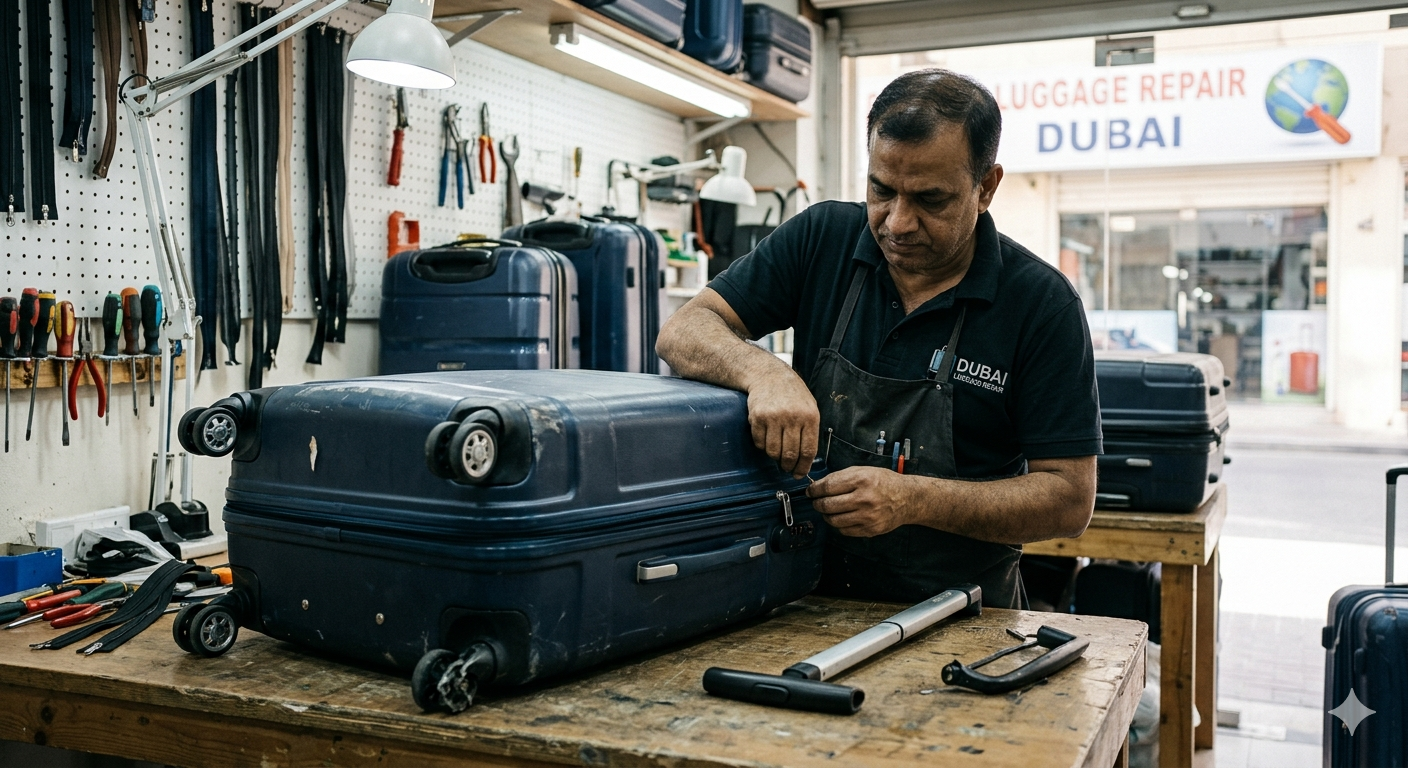
This is where luggage repair Dubai becomes relevant. Instead of treating every damaged suitcase as a replacement project, travelers can evaluate what has happened, identify the part responsible for the problem, and decide whether restoring the existing case makes sense.
Commentaires
A suitcase does not need to be perfect to be useful. In fact, frequent travelers know that luggage quickly develops a history of its own. Scratches appear after repeated journeys, corners become marked, wheels accumulate wear, and handles gradually lose the smoothness they had when the case was new.
What matters is whether those signs are merely cosmetic or whether they are beginning to interfere with travel.
This is where luggage repair Dubai becomes relevant. Instead of treating every damaged suitcase as a replacement project, travelers can evaluate what has happened, identify the part responsible for the problem, and decide whether restoring the existing case makes sense.
Your Next Trip Should Not Be the First Luggage Test
Many people inspect their suitcase only when they begin packing.
That is a risky habit.
Packing day is already busy, and discovering that a wheel will not move properly or that a closure has stopped functioning leaves little time to find a solution.
A better routine is to inspect luggage several days before it is needed.
Take it out of storage and perform a simple travel simulation. Put some belongings inside, move it around, lift it, pull the handle, and operate the closures.
The objective is not to perform a technical inspection. It is simply to discover whether the suitcase still behaves the way you expect.
Travel Creates Different Kinds of Wear
A suitcase experiences several environments during one journey.
It may move over polished floors, rough pavement, carpets, ramps, stairs, and vehicle storage areas. It can be lifted by its handle, pushed from the side, or pulled behind the traveler for long distances.
These repeated movements place stress on different sections of the luggage.
Consequently, wear does not necessarily appear everywhere at once.
One suitcase may have excellent wheels but a weakened handle. Another may have a perfectly good handle but problems with its closure. This uneven wear is one reason repairing a specific component can sometimes be more logical than replacing the entire case.
Don’t Confuse a Used Suitcase With a Bad Suitcase
Luggage can look old long before it becomes unusable.
Surface scratches, faded areas, and small marks are often evidence of travel rather than evidence of failure.
Instead of asking whether the suitcase looks new, ask whether it performs its basic functions.
If it carries belongings securely, moves comfortably, and remains structurally sound, its appearance alone may not justify replacement.
This mindset is particularly useful for travelers who have already invested in a suitcase that suits their needs.
A Familiar Suitcase Has Hidden Value
Shopping for new luggage is not always as simple as it seems.
The new case needs to have an appropriate size, weight, internal organization, movement system, and construction. Even after comparing different options, there is no guarantee that the new suitcase will feel as comfortable as the one you already own.
A repaired suitcase has an advantage that a new suitcase cannot immediately provide: familiarity.
You already know how it behaves when fully packed. You know which compartment holds your essentials and how it fits into your travel routine.
If the underlying case remains good, restoring it can preserve that convenience.
Watch for Changes in Movement
The way luggage moves can reveal developing problems.
Try rolling the suitcase slowly and then changing direction. Notice whether it pulls unexpectedly, becomes difficult to turn, or makes unusual sounds.
A wheel problem may be obvious, but movement can also reveal an issue with an attachment point or surrounding structure.
Do not wait until the suitcase becomes impossible to move.
Early attention gives you more time to determine whether a repair is practical before the problem interferes with an actual journey.
A Handle Is More Important When the Case Is Full
An empty suitcase places relatively little demand on its handle.
A packed suitcase is another matter.
The extra weight increases the force involved when the luggage is pulled, turned, or lifted. If the handle already feels loose or unstable, the problem may become more noticeable during travel.
Testing the handle while the suitcase contains a normal load can therefore provide more useful information than testing it empty.
If it repeatedly sticks, collapses, or fails to remain secure, professional assessment may be appropriate.
Closures Should Be Tested Under Normal Packing Conditions
A zipper or other closure can behave differently when the suitcase is empty.
Once clothing and belongings are packed inside, pressure can build against the sides. A closure that seemed fine during a quick inspection may then become difficult to operate.
Before a trip, pack the suitcase approximately as you normally would and test the main closure.
If it requires unusual force, catches repeatedly, or does not remain properly closed, address the problem before departure.
Dubai Makes Convenience an Important Part of Repair
For residents and visitors in Dubai, time is often a major consideration.
Travel arrangements can involve airport transfers, work commitments, hotel stays, and tightly organized schedules. Carrying damaged luggage across the city is also inconvenient when wheels or handles are already malfunctioning.
That makes a nearby repair option useful.
When searching for luggage repair Dubai, however, convenience should be balanced with suitability. The closest provider is not necessarily the right provider if the service is unfamiliar with your luggage type or the particular repair required.
Give the Repairer Useful Information
You can make the initial conversation more productive by explaining the problem clearly.
Instead of saying only that the suitcase is broken, describe what changed.
For example, explain that one side no longer rolls evenly, the handle will not remain extended, the zipper separates during closing, or a section of the fabric has opened.
Photographs can also help communicate the problem.
A full image of the suitcase combined with close-up pictures of the damaged area can provide useful context before an in-person assessment.
Ask What Will Actually Be Repaired
Before approving the work, understand the proposed solution.
Is the existing component being adjusted? Is it being repaired? Does it need replacement? Is the surrounding area also damaged?
These questions matter because luggage components interact with one another.
A new wheel will not solve a damaged mounting area. A repaired zipper may not remain dependable if the surrounding fabric is severely weakened.
Understanding the full repair scope helps prevent incomplete solutions.
Quality Should Be Measured After the Work
A suitcase repair should be evaluated through performance.
Once the work is complete, operate the repaired component several times. If the wheels were involved, roll the luggage and change directions. If the handle was repaired, extend and retract it repeatedly. If a closure was worked on, open and close it several times.
Then repeat the test with moderate weight inside.
This gives you a much better indication of whether the suitcase is ready for real travel.
Know When a Repair Is No Longer Sensible
Repairing luggage can be useful, but it should not become an automatic decision.
If the suitcase has severe structural damage or several major components are failing simultaneously, replacement may provide better long-term value.
Consider the entire condition of the case rather than one isolated defect.
A suitcase with a strong body and one failed component may be an excellent repair candidate. A case with extensive structural deterioration may not be.
The objective is to restore useful luggage—not to keep repairing an unsuitable product indefinitely.
Think Beyond the Immediate Fix
Once luggage has been repaired, consider what caused the problem.
Was the suitcase repeatedly overloaded? Was it dragged across rough surfaces? Was it stored beneath heavy objects? Did the problem develop gradually because early warning signs were ignored?
Understanding the cause can help reduce the chance of repeating the same problem.
Repair restores the luggage. Better handling habits can help preserve that repair.
The Best Repair Decision Is an Informed One
There is no single answer that applies to every suitcase.
The right choice depends on the condition of the luggage, the extent of the damage, how often it will be used, and the practicality of obtaining a suitable repair.
For someone researching luggage repair Dubai, the process should therefore begin with evaluation rather than an immediate assumption that a particular component must be replaced.
A clear diagnosis makes it easier to compare repair with replacement and choose the option that offers genuine value.
Final Thoughts
Good luggage earns its place through repeated use. It becomes familiar, dependable, and integrated into the way a person travels.
When a suitcase develops a problem, that history is worth considering before buying something new.
Inspect the case before your next trip, distinguish cosmetic wear from functional deterioration, and investigate the actual cause of the problem. If the main structure remains dependable, a targeted repair may restore the suitcase without forcing you to replace something that still meets your needs.
Conclusion
This is where luggage repair Dubai becomes relevant. Instead of treating every damaged suitcase as a replacement project, travelers can evaluate what has happened, identify the part responsible for the problem, and decide whether restoring the existing case makes sense.
Mots Clés : 3.5g gumbo mylar bags