


Indication
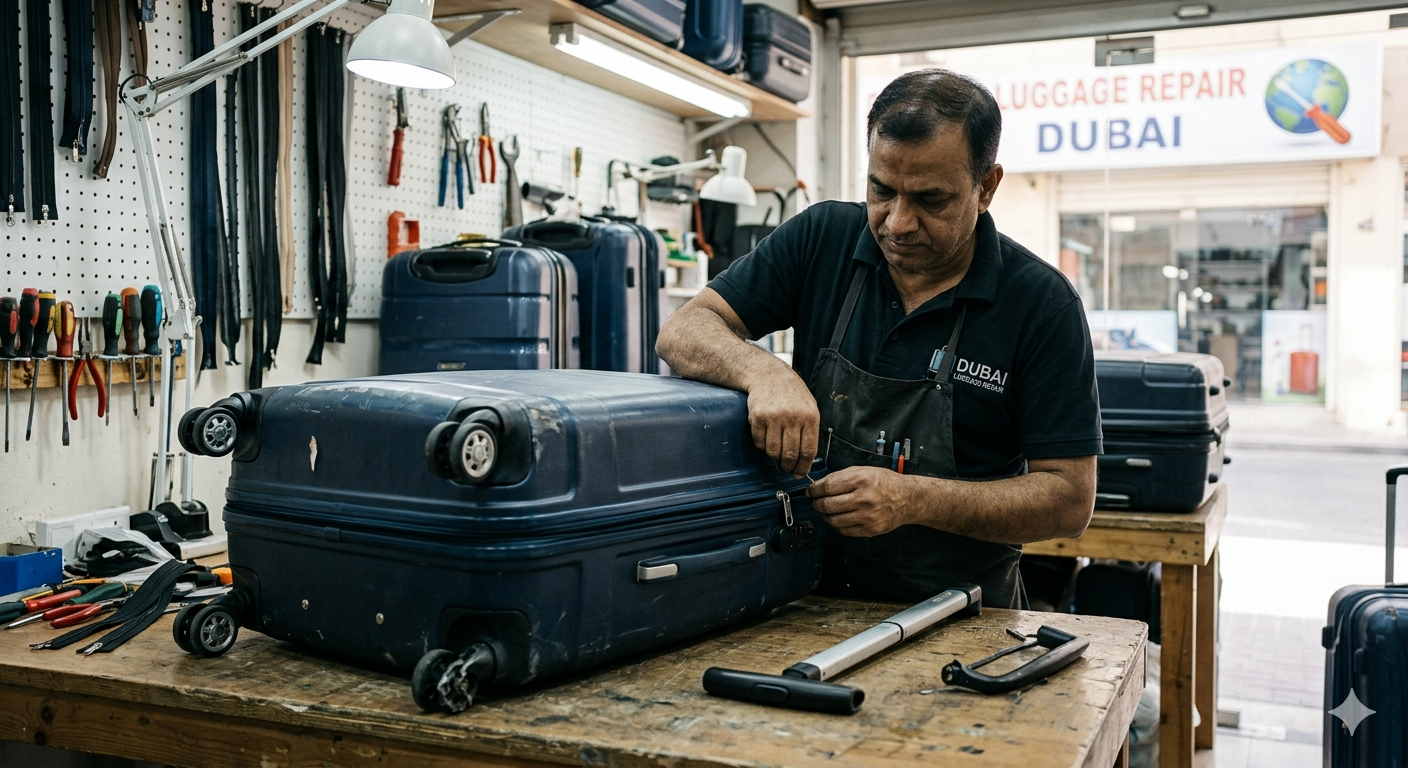
When something goes wrong, replacing the entire case may seem like the easiest answer. Yet many luggage problems are limited to one component. If the main structure is still reliable, searching for suitcase repair near me can be a practical first step before spending money on another case.
Commentaires
Travel luggage has a strange life. It may remain untouched for months, then suddenly spend several days being dragged across sidewalks, lifted into vehicles, pushed through terminals, and handled repeatedly. That combination of long storage and intensive use can eventually expose weaknesses that were not visible when the suitcase was new.
When something goes wrong, replacing the entire case may seem like the easiest answer. Yet many luggage problems are limited to one component. If the main structure is still reliable, searching for suitcase repair near me can be a practical first step before spending money on another case.
The real value of luggage repair lies in identifying what can be restored and what should genuinely be replaced.
Your Suitcase Has a Travel History
Every journey leaves some form of wear behind.
A suitcase may collect scratches, scuffs, small dents, loose threads, or marks from handling. Cosmetic imperfections do not necessarily affect its ability to travel. Functional deterioration is more important.
Think about how the suitcase behaves rather than how it looks.
Does it roll in a straight line? Does the handle stay firmly in position? Can the zippers move without excessive force? Does the case close evenly? Are the wheels securely attached?
These simple observations provide a better picture of its condition than appearance alone.
The Pre-Trip Inspection Most Travelers Skip
One of the worst times to discover luggage damage is immediately before departure.
Instead of waiting until packing day, test your suitcase in advance. Place a moderate amount of weight inside and move it around your home. Pull the handle up and down several times. Open every compartment and operate each zipper.
Pay particular attention to anything that feels different from your previous trip.
A wheel that makes an unusual sound, a handle that shakes, or a zipper that catches repeatedly could indicate a developing problem. Finding these signs early gives you time to investigate repair options.
Why One Broken Part Doesn’t Mean the Suitcase Is Finished
Luggage consists of multiple independent components.
The body may remain strong even when a wheel fails. A perfectly usable interior may still exist despite a damaged zipper. A sturdy shell can remain valuable even when its handle mechanism requires attention.
This is why evaluating the individual failure can be more economical than immediately discarding the complete case.
A repair specialist can determine whether the affected component can be restored or replaced while preserving the rest of the luggage.
Think About the Way You Travel
The value of a repair also depends on how the suitcase is used.
Someone who takes occasional short trips may have very different requirements from a frequent traveler who checks luggage several times each month. A business traveler may prioritize dependable wheels and easy handling, while a family traveler may care more about capacity and interior organization.
Before deciding whether to repair or replace a case, consider whether the existing suitcase still suits your travel habits.
If it does, restoring a damaged component may be more useful than learning to work with an unfamiliar replacement.
Wheel Problems Deserve Early Attention
A suitcase with damaged wheels can become increasingly difficult to control.
If one wheel is wobbling or dragging, the remaining wheels may experience additional stress because the case no longer distributes movement evenly.
Rather than continuing to pull the suitcase until another component fails, have the wheel assembly examined.
Depending on its design, the wheel or associated hardware may be replaceable. The important consideration is obtaining a compatible part and ensuring that it is securely installed.
Don’t Underestimate Handle Damage
A telescopic handle may look simple from the outside, but its operation depends on internal components and attachment points.
If it no longer locks properly, feels unstable, or refuses to extend smoothly, continuing to use it can make the problem worse.
A luggage technician can examine whether the issue involves the release mechanism, rails, fasteners, or the handle itself.
For travelers who frequently move through airports or train stations, restoring reliable handle operation can make a noticeable difference.
Zippers Protect More Than Your Clothes
The zipper is responsible for keeping the contents of the suitcase contained during movement.
A damaged zipper can therefore become more than a minor inconvenience. If the slider repeatedly separates or the surrounding fabric begins to pull apart, the problem should be addressed before the case is loaded for travel.
Different zipper failures require different solutions. A damaged pull is not the same as a worn slider, and a slider problem is different again from damage to the zipper track or fabric.
Correct diagnosis is important because replacing more of the zipper than necessary can increase the cost of the repair.
Hard Shell or Fabric: The Repair Strategy Changes
Luggage construction influences what can realistically be repaired.
Hard-shell cases can suffer from impact-related cracks, damaged corners, or problems around wheel and handle mounting areas. Soft luggage can develop torn fabric, weakened seams, damaged pockets, or separation around attachment points.
The material also affects the durability of a repair.
A specialist should therefore consider both the visible damage and the material surrounding it. A repair that ignores weakened surrounding areas may not remain dependable under another heavy travel load.
When Sentimental Value Matters
Not every suitcase is valuable because of its price.
Some travelers become attached to luggage because it has accompanied them on important journeys. A particular case may have been used for family holidays, international trips, or years of business travel.
If the suitcase remains structurally sound, repairing it can preserve something that would otherwise be difficult to replace.
The same applies to luggage with a particularly useful size, interior layout, or design that is no longer readily available.
Finding the Right Repair Option Nearby
A search for suitcase repair near me naturally starts with convenience, but location should be only one part of the decision.
Before choosing a repair provider, consider whether the service handles luggage rather than general household items only. It can also help to provide photographs of the damaged component and ask whether the suitcase can be assessed.
A useful repair service should be able to explain what appears to be wrong and what kind of work may be necessary.
This makes the process more transparent and helps avoid unnecessary replacement.
Ask About Parts Before You Commit
Luggage manufacturers use many different designs.
Two suitcases may look similar while using completely different wheel assemblies, handle systems, or zipper dimensions. A replacement component therefore needs to be suitable for the specific case.
If a repair involves a new part, ask whether the component is compatible and whether installation requires modification.
The goal should be to restore the suitcase without introducing another weak point.
Don’t Pack a Repaired Suitcase Without Testing It
After repair, give the luggage a trial run.
Put some weight inside and roll it across several surfaces. Extend the handle repeatedly. Open and close the repaired zipper. Check that repaired sections remain secure while the suitcase is being moved.
This test is particularly important before a long journey.
If something still feels unusual, it is much easier to return to the repair provider before departure than to deal with the same issue halfway through a trip.
Repair Can Be Part of Sustainable Travel Habits
Replacing an entire suitcase because of one failed component is not always necessary.
Keeping a usable case in service through targeted repairs can reduce the amount of luggage discarded simply because one part has worn out. It also allows travelers to make use of a suitcase they already know fits their needs.
Repair is not appropriate for every situation, especially when structural damage is extensive. But checking the repair possibility first can be a sensible habit.
Final Thoughts
A suitcase does not become useless simply because its wheels, handle, zipper, or another component develops a problem. The important question is whether the underlying case remains suitable for continued travel.
When searching for suitcase repair near me, begin with an honest assessment of the luggage. Separate cosmetic marks from functional problems, identify the failed component, consider how you travel, and ask whether the proposed repair will provide dependable results.
A nearby specialist can make the process more convenient, but expertise and repair suitability matter just as much as distance.
Before sending a familiar suitcase into retirement, give it one careful inspection. With the right repair, your trusted travel companion may have many more journeys ahead.
Conclusion
When something goes wrong, replacing the entire case may seem like the easiest answer. Yet many luggage problems are limited to one component. If the main structure is still reliable, searching for suitcase repair near me can be a practical first step before spending money on another case.
Mots Clés : 131I