


Indication
Learn how to build a shipping buffer into your budget when importing a Japanese car, covering freight, port fees, currency changes, taxes, and unexpected costs.
Commentaires
Buying a vehicle from Japan can be an attractive proposition for international buyers, particularly when the market offers a broad selection of well-maintained, competitively priced vehicles. However, the purchase price shown at auction or by an exporter is rarely the final amount required to place the vehicle on the road. Shipping, port charges, documentation, currency fluctuations, insurance, and unexpected logistical expenses can gradually inflate the original estimate.
For that reason, establishing a shipping buffer is one of the most prudent steps when importing a vehicle. A carefully calculated reserve can prevent an appealing Japanese car from becoming an unexpectedly expensive purchase.
Understand the Difference Between Purchase Price and Landed Cost
The first step is to distinguish the vehicle’s purchase price from its landed cost. The purchase price may include the auction bid or supplier’s vehicle price, but the landed cost encompasses the broader financial journey from Japan to the destination country.
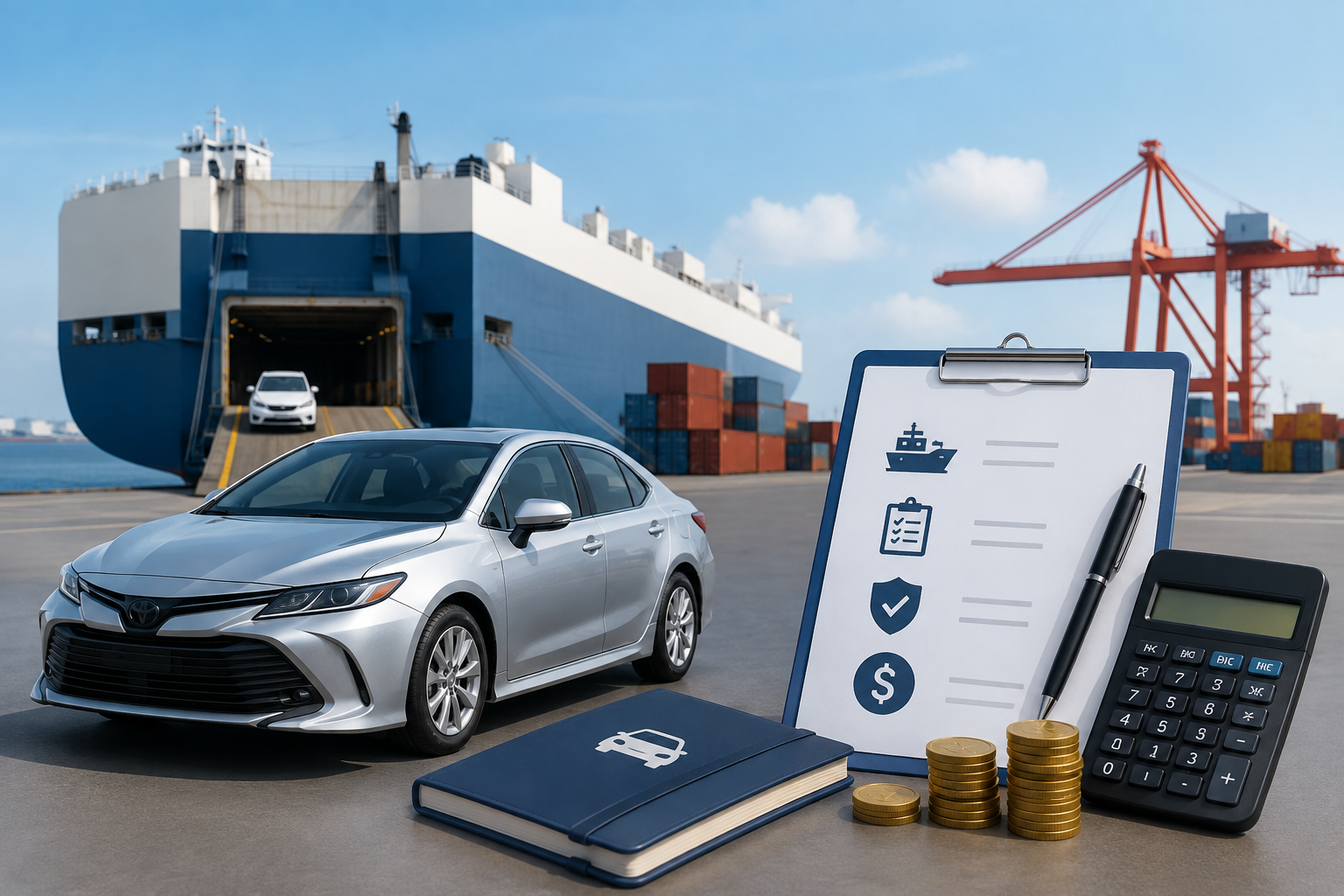
A typical budget may include auction or dealer fees, inland transportation, export documentation, port handling, ocean freight, marine insurance, destination charges, customs duties, taxes, registration expenses, and local transportation.
A Japanese used car exporter can usually provide estimates for several of these expenses, but certain charges may remain variable because they depend on shipping schedules, destination ports, exchange rates, vehicle dimensions, and local regulations.
Why a Shipping Buffer Matters
International vehicle shipping rarely follows a perfectly predictable financial trajectory. Even when the main freight quotation is fixed, ancillary expenses can emerge during the process.
A shipping buffer functions as financial insulation. Instead of calculating the budget down to the last currency unit, buyers reserve additional money for plausible fluctuations and unforeseen charges.
For example, if the projected transportation and import-related expenses total $2,000, setting aside another 10–15% could create a buffer of approximately $200–$300. The appropriate percentage depends on the destination, shipping method, vehicle type, and reliability of the available quotations.
For higher-value vehicles or complicated import routes, a larger reserve may be sensible.
Break the Shipping Budget Into Separate Categories
A single figure for « shipping » can obscure important costs. A more reliable approach is to divide the budget into individual categories.
Inland Transportation in Japan
After purchasing a vehicle, it may need to travel from an auction location, dealership, or storage facility to the export port. The distance involved can affect the transportation charge considerably.
Remote auction locations may therefore require a larger allowance than vehicles purchased close to major ports.
Export and Port Charges
Documentation, customs procedures, terminal handling, inspection, storage, and other port-related services may contribute to the overall cost. Some charges are predictable, while others can depend on circumstances surrounding the shipment.
Ocean Freight
Freight is often one of the most substantial components of the international shipping budget. Costs can vary according to the destination, shipping route, vessel availability, seasonal demand, and whether the vehicle travels through RoRo or container shipping.
Destination Expenses
A vehicle arriving at the destination port does not necessarily mean the financial obligations are finished. Port handling, customs clearance, storage, inland transportation, and other local charges may still apply.
These expenses should be incorporated into the budget before the vehicle is purchased.
Account for Currency Fluctuations
Exchange-rate movements can quietly erode an otherwise accurate budget. A buyer calculating costs in pounds, euros, dollars, or another currency may ultimately pay more if the exchange rate shifts between the initial quotation and final settlement.
Rather than assuming today’s exchange rate will remain unchanged, it is sensible to incorporate a modest currency contingency into the overall reserve. Buyers dealing with substantial transactions should be particularly cautious because even a small percentage movement can translate into a meaningful difference.
Consider Seasonal and Operational Delays
Shipping schedules are not always linear. Port congestion, vessel availability, adverse weather, public holidays, customs procedures, and documentation issues can delay transportation.
A delay can create additional storage or handling charges, especially when a vehicle remains at a port beyond the expected period. Therefore, a financial buffer should account not only for price fluctuations but also for potential delays.
A reputable Japanese used car exporter should explain the anticipated shipping timeline and identify charges that could arise if circumstances change.
Build the Buffer Before Buying
One of the most effective strategies is to establish the contingency reserve before placing a bid. This prevents buyers from treating the buffer as spare money that can instead be spent on a more expensive vehicle.
For example, a buyer might establish a total import budget of $15,000. Rather than allocating the entire amount toward the vehicle itself, a portion could be reserved for shipping, taxes, duties, and unexpected expenses. This creates a financial ceiling that is much more realistic than focusing exclusively on the auction price.
The principle is straightforward: budget for the complete import journey, not merely the vehicle.
Use Multiple Estimates Where Possible
Comparing quotations can reveal whether a projected shipping cost is realistic. Freight rates from different periods or providers may vary, so relying on a single estimate can create false confidence.
However, the cheapest quotation is not automatically the best option. Buyers should examine what each quotation actually includes. A seemingly inexpensive freight rate may exclude port handling, documentation, insurance, or other charges that appear later.
Transparent pricing is therefore more valuable than an artificially low headline figure.
Keep an Emergency Reserve Separate
A useful budgeting technique is to maintain two layers of protection. The first is a planned shipping contingency, while the second is a broader emergency reserve.
The shipping contingency might cover ordinary variations in freight and logistics costs. The emergency reserve can remain untouched unless something genuinely unexpected occurs, such as extended storage, additional documentation, repairs required before shipment, or significant currency movement.
This separation makes the overall financial plan considerably more resilient.
Final Thoughts
Importing a vehicle from Japan can be financially rewarding, but successful budgeting requires more than finding an attractive auction price. Shipping and associated expenses can accumulate through multiple stages, making a contingency reserve an indispensable part of the purchasing strategy.
By separating inland transport, port fees, freight, destination charges, taxes, currency fluctuations, and possible delays, buyers can construct a much more credible estimate. Working with a transparent Japanese used car exporter can also make these costs easier to understand before committing to a purchase.
Ultimately, a shipping buffer is not wasted money. It is a safeguard against uncertainty and one of the simplest ways to make the journey from Japanese auction to overseas driveway more predictable.
Conclusion
Importing a vehicle from Japan can be financially rewarding, but successful budgeting requires more than finding an attractive auction price. Shipping and associated expenses can accumulate through multiple stages, making a contingency reserve an indispensable part of the purchasing strategy.
By separating inland transport, port fees, freight, destination charges, taxes, currency fluctuations, and possible delays, buyers can construct a much more credible estimate. Working with a transparent Japanese used car exporter can also make these costs easier to understand before committing to a purchase.
Ultimately, a shipping buffer is not wasted money. It is a safeguard against uncertainty and one of the simplest ways to make the journey from Japanese auction to overseas driveway more predictable.
Mots Clés : 131I Ajouter du contenu